

 All products
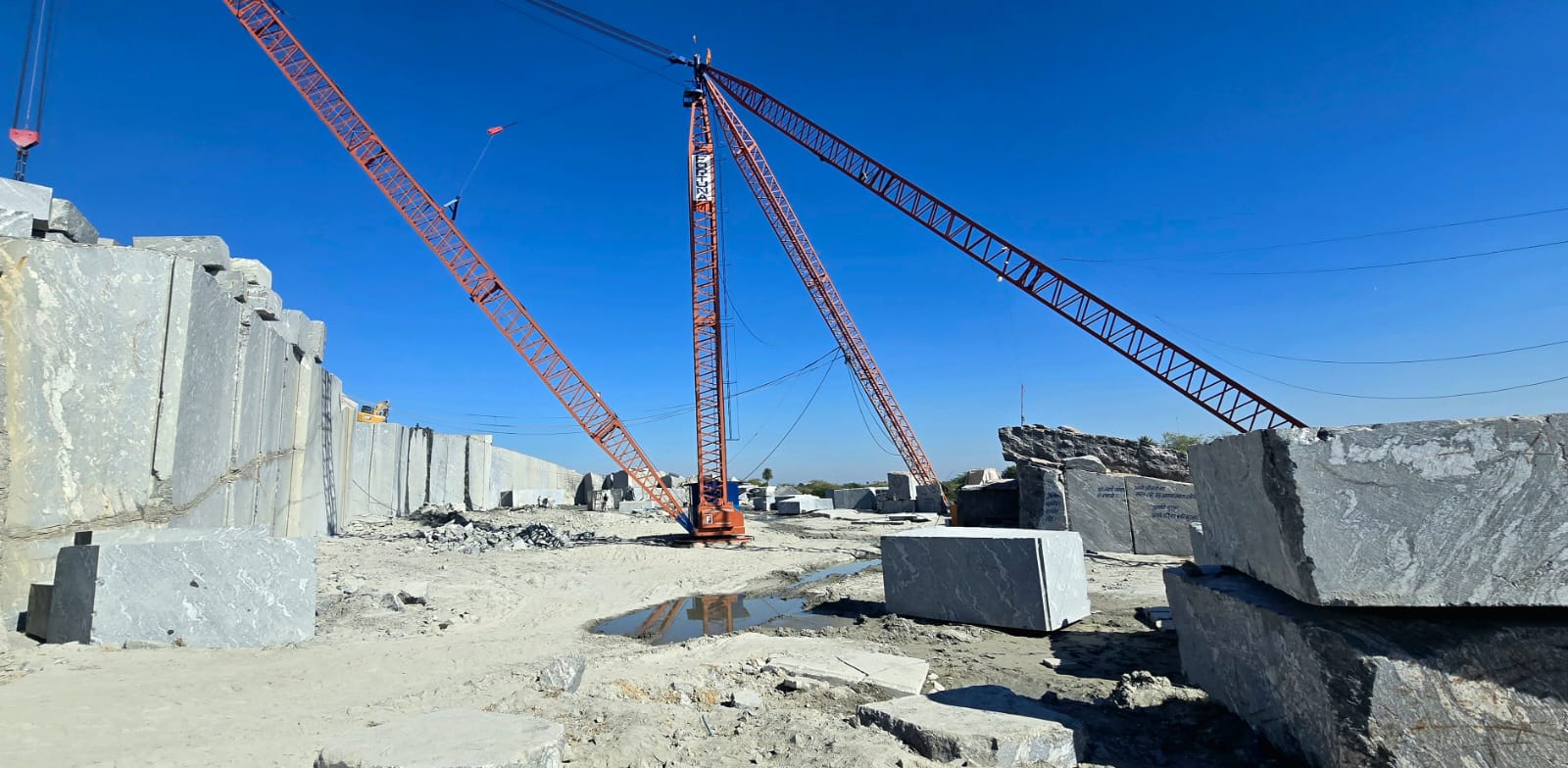
How To Import Natural Stone from India.
Indian Stone Exporter
Buy Granite From India
Natural Stone Import Process
Stone Supplier India Export
India is one of the world’s largest producers and exporters of natural stone. From the blush-pink granites of Rajasthan to the rich black slates of Andhra Pradesh, Indian stone has graced five-star hotel lobbies in Dubai, historic villas in Tuscany, and landmark commercial developments across the United Kingdom, United States, Poland, and South Africa.
Yet for many first-time buyers — architects, interior designers, property developers and procurement managers — the process of learning how to import natural stone from India can feel uncertain. Questions around quality verification, minimum order quantities, customs documentation, and reliable logistics hold buyers back from accessing stone that is typically 30–50% more cost-effective than sourcing through local distributors.
This guide removes that uncertainty. Below is a clear, practical walkthrough of how to import natural stone from India, drawn from our experience shipping to buyers in over 15 countries.
Step 1: Define Your Project Requirements
Before approaching any supplier, be specific. The more detailed your project brief, the faster a reputable exporter can respond with accurate pricing.
Your brief should include:
- Stone type — Granite, Marble, Sandstone, Slate, Limestone, Quartzite, or Kerbstone
- Application — Flooring, wall cladding, countertops, outdoor paving, roofing, or garden landscaping
- Finish required — Polished, honed, flamed, brushed, sandblasted, or natural cleft
- Dimensions — Standard tile sizes (e.g. 600×300mm, 300×300mm) or bespoke cut-to-size
- Quantity — In square metres or metric tonnes
- Destination country — Determines logistics routing and applicable import duties
- Timeline — Production lead time is typically 3–6 weeks depending on stock and finish
Buyers who arrive with a clear brief receive accurate proforma invoices within 24–48 hours. Those without one spend weeks in back-and-forth that delays projects unnecessarily.
Step 2: Request Physical Samples Before Committing
No professional buyer should commit to a container order without physically handling the stone first. Any trustworthy exporter — when you are researching how to import natural stone from India — will always offer to dispatch physical samples before any commercial transaction.
When evaluating samples, examine:
- Colour consistency — Natural stone has inherent variation; the batch should fall within an acceptable visual range
- Surface finish quality — Edges should be sharp and clean; polished finishes should be streak-free and uniform
- Thickness tolerance — Industry standard is ±1–2mm
- Water absorption rate — Critical for outdoor, bathroom, and wet-area applications
- Weight and density — Confirms stone grade; heavier typically indicates a denser, more durable material
According to the Indian Granite & Stone Industry Federation (IGSI), India exports over 1.6 million metric tonnes of processed natural stone annually — making it critical to select a supplier who can demonstrate consistent quality across batches, not just in a sample.
At Vinman Stoney, samples are available across all product categories — Granite, Marble, Slate, Sandstone, Limestone, Kerbstone, Counter Tops and Stone Artwork — and are dispatched to buyers in Europe, the Middle East, North America and worldwide. Request samples here.
Step 3: Obtain a Proforma Invoice and Confirm Pricing
Once satisfied with samples, request a formal Proforma Invoice (PI). This is a standard pre-shipment document that confirms the commercial terms of the order.
A well-prepared PI should include:
- Full product description with HS (Harmonised System) tariff code
- Unit price (quoted Ex-Works, FOB, or CIF — see below)
- Total order value in USD, EUR or GBP
- Payment terms — typically 30–50% advance deposit, balance before shipment or against Bill of Lading
- Production and packing lead time
- Port of loading (Mundra, Nhava Sheva/Mumbai, or Chennai for most Indian stone exporters)
Understanding Incoterms for stone imports: FOB (Free on Board) is the most common arrangement for experienced importers — the supplier delivers goods to the origin port and the buyer arranges onward freight and marine insurance. CIF (Cost, Insurance, Freight) means the supplier manages shipping to the destination port, which is often preferable for first-time importers as it simplifies the logistics chain on the buyer’s side.
For guidance on Incoterms and how they affect your landed cost, the International Chamber of Commerce Incoterms 2020 guide is the definitive reference.
Step 4: Understand Packing Standards and Container Loading
Natural stone is dense, fragile at the edges, and heavy. Packing quality is not a minor detail — it directly determines whether your order arrives in full, usable condition.
Professional Indian stone exporters should use:
- ISPM 15 certified wooden crates — heat-treated timber is an international customs requirement for wooden packaging in nearly all destination markets
- Foam or rubber interlayers between stone pieces to absorb vibration and prevent edge chipping in transit
- Steel strapping and corner protectors to secure crates during container loading and offloading
- Container loading plan — a well-loaded 20ft container carries 18–22 metric tonnes of stone; a 40ft container carries 25–28 metric tonnes
At Vinman Stoney, our packing process is designed specifically for long-haul international shipments. Every crate is marked with product code, dimensions, gross weight, net weight and country of origin — all fields required by customs authorities at destination.
Step 5: Know Your Import Duties and Required Documents
Each destination country applies its own tariff to imported natural stone. Products typically fall under HS Chapter 68 (worked articles of stone) or HS Chapter 25 (raw stone, sand, gravel) depending on processing level.
Approximate import duty rates for Indian natural stone (2024–25):
| Destination | Approximate Duty | Key Notes |
|---|---|---|
| United Kingdom | 0 – 3.5% | UK Global Tariff; most processed stone enters duty-free |
| European Union | 1.7 – 3.5% | Common External Tariff; varies by HS code |
| United Arab Emirates | 5% | GCC standard tariff; Dubai free zone imports may be exempt |
| United States | 0 – 3.7% | Most natural stone qualifies for duty-free entry |
| Australia | 0 – 5% | Free Trade Agreement benefits may apply |
Always confirm current rates with your licensed customs broker before finalising landed cost calculations, as tariff schedules are updated periodically.
Essential export documents your Indian supplier must provide:
- Commercial Invoice (signed, on company letterhead)
- Detailed Packing List
- Bill of Lading (sea freight) or Airway Bill (air freight)
- Certificate of Origin — issued by the Export Promotion Council for EOUs & SEZs (EPCES) or local Chamber of Commerce
- Phytosanitary / Fumigation Certificate for wooden packaging (ISPM 15 compliance)
- Quality or Inspection Certificate if specified in the purchase order
Step 6: Appoint a Freight Forwarder in Your Country
Your Indian supplier handles export documentation and port loading. At destination, you will need a licensed freight forwarder or customs broker to manage:
- Import customs clearance and tariff classification
- VAT, GST or equivalent consumption tax payment at point of entry
- Port storage and container release
- Last-mile delivery from port to your warehouse or project site
When briefing your freight forwarder, provide the full packing list, container number, Bill of Lading, and gross weight in advance. A 20ft container loaded with granite typically requires a heavy-goods flatbed with crane or tail-lift offload at destination — arrangements your forwarder should confirm before arrival.
For buyers in the UK, the British International Freight Association (BIFA) maintains a directory of licensed freight forwarders experienced in stone cargo. For UAE-based buyers, the Dubai Trade portal provides import procedure guidance specific to the UAE.
Step 7: Inspect the Consignment on Arrival
Before signing off with the carrier on delivery day, inspect the full consignment against the original packing list and approved samples:
- Count and measure — verify piece count and total square metreage matches the packing list
- Check for transit damage — edge chips or cracked pieces must be noted on the delivery receipt before signing; unsigned claims are difficult to pursue after the fact
- Colour and finish check — confirm consistency with the approved sample retained from Step 2
A trustworthy exporter photographs every packing stage and container load before departure. At Vinman Stoney, this photographic record is provided to buyers as part of the shipment documentation, giving a clear chain of evidence for any insurance or carrier claim.
Why Buyers Choose Vinman Stoney for Indian Stone Imports
Vinman Stoney is a 100% Export Oriented Unit (EOU) headquartered in New Delhi, India, with trading offices in Lucca, Italy and Dubai, UAE — giving our international clients local support across three major markets simultaneously.
We have supplied architects, hotel groups, interior designers, landscaping contractors and stone importers across Europe, the Middle East, North America, Southeast Asia and Africa. Our clients return order after order because we combine the depth and diversity of India’s finest quarries with the rigour of an internationally experienced export operation.
What we offer every buyer:
- Complete product range: Granite, Marble, Slate, Sandstone, Limestone, Quartzite, Kerbstone, Counter Tops, Stone Artwork
- Physical samples dispatched worldwide before any financial commitment
- End-to-end export documentation management
- Transparent pricing with full Incoterms flexibility
- Offices in India, Italy and Dubai for regional buyer support
- Custom sizing, finish and thickness available on request
Frequently Asked Questions
What is the minimum order quantity to import natural stone from India? For container orders, the typical minimum is one 20ft container (approximately 18–22 metric tonnes). Smaller trial orders can sometimes be accommodated via groupage / LCL (Less than Container Load) shipments — ask your supplier.
How long does shipping from India take? Sea freight transit times are approximately 14–18 days to Dubai, 20–25 days to European ports, and 25–35 days to US East Coast ports, depending on the shipping line and routing.
Can I visit the quarry or production facility before ordering? Yes. Reputable exporters welcome buyer visits. Vinman Stoney can arrange quarry and factory visits for serious buyers travelling to India.
Do Indian stone exporters provide samples for free? Most established exporters provide samples at no charge; the buyer typically covers international courier costs. Confirm this with your supplier before requesting.
Ready to Start Your Import Journey?
Whether you are placing your first stone order or sourcing for an ongoing commercial project, our export team in Delhi, Dubai and Italy is ready to assist from the very first sample request through to port delivery.
Delhi HQ: +91 9910096543 | vishwanath@vinmanstoney.in Dubai Office: +971 568 867 792 Italy Office: +39 3208522900
→ Request a Free Sample or Get a Project Quote
→ Browse Our Full Natural Stone Range
Vinman Stoney — Inspiring global spaces with the timeless beauty of Indian natural stone.